
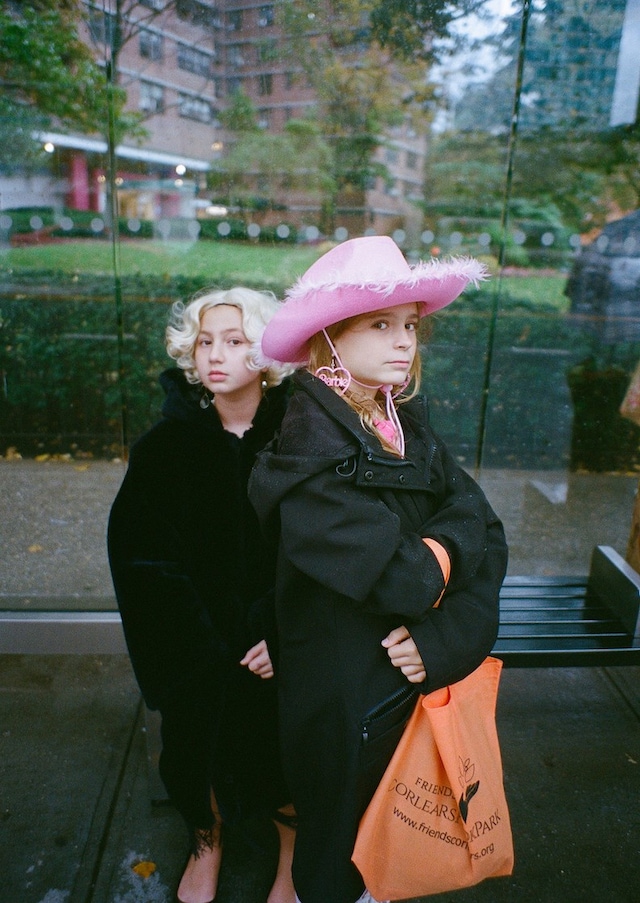
With his new book Sorry, Now You Say Sorry, photographer Alain Levitt is fully present, portraying the mayhem and unadulterated love of his family life
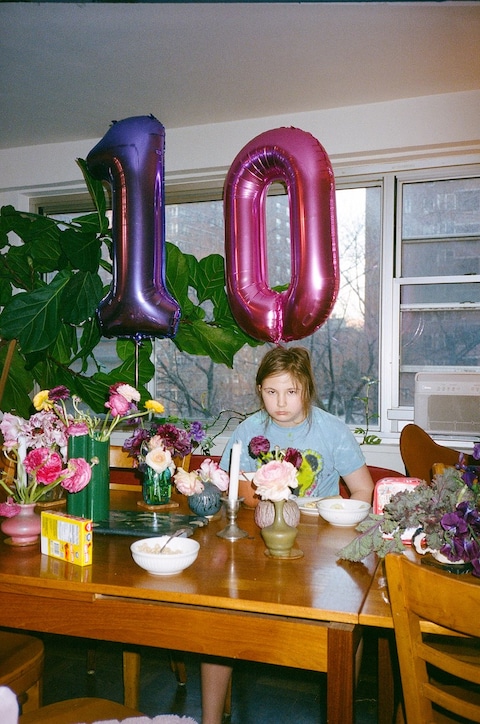
Healing and growth underlie Alain Levitt’s most recent photobook, Sorry, Now You Say Sorry, a portrait of his life over the last five years, centred on his two daughters, Ludvine and Rima. Here, Levitt documents his family home and its surroundings, inviting you in to celebrate birthdays, play dress-up and try out new toys via a series of flash-heavy close-ups. It is a record of fatherhood that has the same candid rawness he brought to photographing his skateboarding and graffiti-writing friends as they menaced through New York City’s streets and bars in the early noughties.
Levitt is best known for capturing that city’s downtown scene. The 2024 release of his book, NYC: 2000-2005 – a bright and raw record of the early noughties club scene and the likes of Chloë Sevingy, Spike Jonze, the IRAK Crew, Dash Snow, and Mark Gonzales – brought Levitt back into the limelight and helped him fall back in love with the career and passion he had stepped away from after the birth of his first daughter in 2012. “I remember having a realisation that I wanted to be more present,” Levitt says over the phone. “I saw that I was hiding behind the camera in a lot of ways. I thought, OK, I want to be present. I’m going to stop taking photos.”





It wasn’t until 2021, when he began to go through his archive, sharing its images on Instagram, that an old friend, Alex ‘2Tone’ Erdmann, co-founder of streetwear label Born x Raised, asked him to shoot an upcoming campaign. Bringing his camera out of retirement for the shoot, it quickly crept back into his bag for the first time in eight years.
By this time, his life had changed: no longer partying or bartending, he was a stay-at-home dad. Inspired again, he began pointing his camera towards those he was around most, his daughters, and no emotions were barred. “We’re their parents; they act exactly how they want to in front of us, outbursts and all,” he says. “I get all these amazing moments that I don’t with most friends. It’s this complete surrender in a way you can only do in front of your family.”

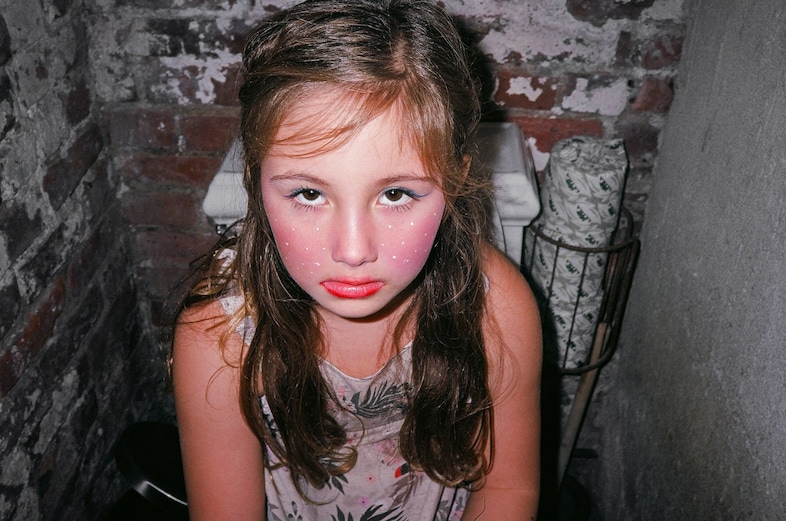
Opening with a photograph of Rima on a grey day in the park, arms crossed, wearing a party hat, eyes full of tears and lit by the flash of her dad’s camera, the tone of Sorry, Now You Say Sorry is set from the jump. A realistic family portrait that holds the bumps in the road – outbursts, tears and confusion – with the same reverence as smiles and composure. Levitt acknowledges this reality with the book’s title. “‘Sorry, now you say sorry’ is what Rima says every time she’s upset or does something that upsets us,” Levitt explains. “It’s her way of disarming the situation. She’ll say sorry, but at the same time demand a sorry; like, ‘Sorry, now it’s your turn to say sorry,’ and if you don’t, she won’t let it rest. We all have such strong and different personalities, and the title represents us. It’s about finding middle ground and accepting the situation.”


Strong personalities roar throughout the book. There are looks of pre-teen sass that scream, “Ugh, another photo! Dad, put away the camera!” sandwiched between quiet moments of the girls asleep, cuddled up to their mother. Or post-tantrum portraits, where heavy frowns accompany carefully wiped eyes: an attempt to save freshly applied face paint from tears. The before and after is embedded in the moment: the tantrums, the conversations, the frustrated screams, the sighs and the laughs.
An immense sense of gratitude radiates from Levitt as he talks about his daughters. “Having children changed my perspective of myself, especially as someone who has insecurities,” he says “These kids give you this love that you can't deny. That love teaches you something, and maybe you can change your perspective about yourself.” It’s that same feeling of self-acceptance that’s been affirmed by seeing the success of NYC: 2000-2005, “[it convinced] me that something was there; that photography wasn’t a failure. Once I started to believe it and could see it, it just got me so excited. I had so much growth from there,” he says.

I bring up the short blurb that Levitt wrote to accompany the book that reads: “Someone once told me that you raise your kids the way you wish you’d been raised. What they didn’t tell me was how much you heal in the process. Totally present for the first time, these photos are from the best days of my life.” He’s evidently moved, talking about his life as a parent. “I didn’t go into parenthood knowing that this was going to heal me in so many ways, but by doing it right, you get this love that corrects whatever you were missing. My perspective on life is different. My approach to everything is different. Without them, I never would’ve gotten here. None of this would’ve come had I not had them and had the growth, because before having them, my thinking was so different.”
Sorry, Now You Say Sorry by Alain Levitt is published by SUPERLABO and out now