

This month brings a bumper crop of releases including a major new film from Korean master Lee Chang-dong and a chilling drama starring Léa Seydoux
Possible Love
23 October
For years Lee Chang-dong was one of world cinema’s most slept-on talents, a filmmaker of penetrating depth and subtlety who fast became a critics’ fave while failing to make the kind of splash abroad enjoyed by his compatriots, Bong Joon Ho and Park Chan-wook. That all changed with Burning (2018), an enigmatic thriller of roiling class tensions that anticipated the hallyu wave of the late 2010s, and provided the director with an international breakthrough at the age of 64.
For his seventh feature to date, Possible Love, Lee tells the story of an affluent filmmaker, Ye-ji (Parasite’s Cho Yeo-jong), who is making a documentary about the plight of laid-off factory workers. Her camera soon alights on Ho-seok (Sul Kyung-gu), a surly middle-aged man who refuses to talk, and his garrulous wife, Mi-ok (Secret Sunshine’s Jeon Do-yeon, a tremendously sly performance). With her suave husband Sang-woo (Zo In-sung), she earns the couple’s trust before inviting them out on a trip to the country, where their fragile bond turns suddenly volatile.
Lee is an acute observer of human power dynamics and he’s in his element here, rejecting a clear narrative arc to float a series of shifting allegiances between the drama’s four main players. Mi-ok’s relationship with her host threatens to turn amorous, and between the isolated Ho-seok and his son Cheol, who continually haunts the frame as an observer, the film keeps the idea that all this might spill over into tragedy hauntingly within reach. It’s a terrific film, on speaking terms with other capitalist critiques of the Korean second wave like Parasite, No Other Choice and even his own Burning, but far removed in its restraint and its willingness to at least ponder a world where love and empathy might bridge the widening class divide.


Gentle Monster
30 October
Marie Kreutzer began work on her new film in 2020 after reading a report about a paedophile ring uncovered by German police. But events closer to home soon conspired to make the project a personal one. Corsage had been a breakout hit for the director in 2022, a revisionist period romp starring Vicky Krieps as Empress “Sisi” Elisabeth. But when one of its leads, Florian Teichtmeister, was charged with possession of child pornography, a national scandal ensued that led to a change in the law in Austria.
Kreutzer’s latest, Gentle Monster, tells the intertwined stories of Lucy (Léa Seydoux), a concert pianist whose life is upended when hubby Philip (Laurence Rupp) is arrested on charges similar to Techtmeister’s, and Elsa (Jella Haase), a young police officer investigating the case. Elsa looks on with concern – and maybe a touch of judgment – as Lucy flits between seething anger and denial at her husband’s alleged crimes; taking her son off to stay with her mum (Catherine Deneuve), Lucy is later swayed by the excuses of a lawyer, Lukas, who says that Philip downloaded the images for a film he was planning to make.
It’s a sobering subject matter that demands a serious approach, and Gentle Monster gets off to a shaky start when it signals its themes with a halting rendition of Charles & Eddie’s “Would I Lie to You?”, performed by Lucy at the piano. But it’s anchored by a deeply committed turn from Seydoux, doing delicate work as a woman consumed by her grief, and a patient, clear-eyed focus on the damage done by Philip’s crimes. The twin-narrative structure is a curious one, probing Kreutzer’s themes of complicity but failing to convince in the parallels it draws between Lucy and Elsa’s stories. (Lucy’s own dad, we learn, lives at home with the early stages of dementia, and has been sexually harassing his female nurse.) Whatever its missteps, Gentle Monster is a film with a terrible weight on its mind and a central performance to make it count.

Primetime
30 October
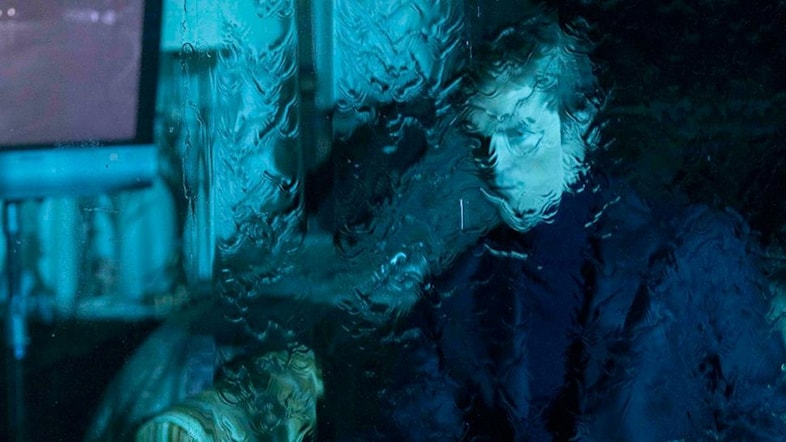
“For those unfamiliar with the dubious format of presenter Chris Hansen’s once-ubiquitous 2000s show, which has since entered internet folklore, To Catch a Predator posed as a legitimate investigation into the number of paedophiles in different US states. Hansen [played here by Robert Pattinson in what may be the performance of his career] enlisted a network of Myspace-wielding wannabe vigilantes to pose as children in online chats and arrange meetings with adult men who propositioned them. Once they were through the door, Hansen would confront them with the evidence gathered against them […]
“[Director Lance] Oppenheim’s quasi-horror fiction-feature debut may in many ways be a takedown of the attitudes which allowed Hansen’s show to succeed (and cling on in the cultural consciousness as a string of spin-offs). But he also appeals to our own morbid fascination with the show’s inner workings, giving the film a slick coating of irony. It manages to be as murky as its subject, and that’s no mean feat.” From Miriam Balanescu’s Venice review

Fatherland
23 October
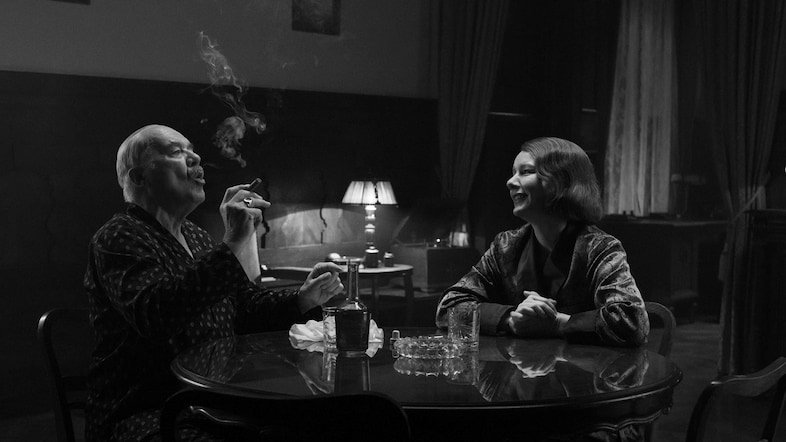
“Is there a better actor in the world right now than Sandra Hüller? The German star broke through with her nerveless performance in Toni Erdmann (2016), ascending to a higher plane of artistry with stellar performances in Anatomy of a Fall and The Zone of Interest, both of which premiered at Cannes Film Festival in 2023.
“She’s wonderful again in Fatherland, perfecting a stare that is somewhere between pity and bottomless scorn as Erika Mann, the writer, actor and anti-Nazi campaigner returned to the ruins of Germany with her dad, the Pulitzer prize-winning author Thomas Mann. It’s another poetic and incisively layered drama from Polish auteur Paweł Pawlikowski, capping (after Ida and Cold War) a loose trilogy of films charting the chaos and ‘moral confusion’ of post-war Europe with the deftest of touches.” From Alex Denney’s Cannes first-look review