

As Digger opens in cinemas, we unpack highlights from the Mexican auteur’s sprawling, existential filmography
Despite only having seven features to his name, Alejandro González Iñárritu has amassed a reputation that far precedes him. A defining figure of the New Mexican Cinema alongside Alfonso Cuarón and Guillermo del Toro, the 63-year-old has forged a formidable career out of plumbing the depths of the human condition through fraught, intricately woven psychological dramas, earning him historic back-to-back Academy awards for best director and a slew of critical and commercial acclaim along the way.
As with many of his maverick contemporaries, Iñárritu did not come from a traditional filmmaking background. Expelled from high school early on, he worked as a merchant seaman before landing a stint as a rock radio DJ and eventually making a name for himself as an “adman”. By the time he unleashed Amores Perros, he had led so many different lives that he seemed to emerge fully formed behind the camera, uniquely equipped to lay bare our existence as it is: painful, difficult, chaotic yet entirely miraculous. In Iñárritu’s words, “Every film that I have done is an extension of myself.”
From the entangled ill fates of his “Trilogy of Death” to the punishing ordeals of The Revenant and the introspective anguish of Bardo, False Chronicle of a Handful of Truths, Iñárritu’s films notoriously eschew tidy catharsis and make voracious feasts of our suffering, unmasking our most discomfiting moral and existential realities. Now, Iñárritu returns with a “comedy of catastrophic proportions” about an oil tycoon attempting to reverse the world-ending damage he has wrought. Shrouded in mystery due to its absence from the major festival circuit and recent online speculation that it might secretly be a musical (remember Tim Burton’s Sweeney Todd?), Digger is set to be another riveting evolution in his catalogue.
Ahead of the film’s UK release, AnOther recommends six essential works from the Mexican auteur.

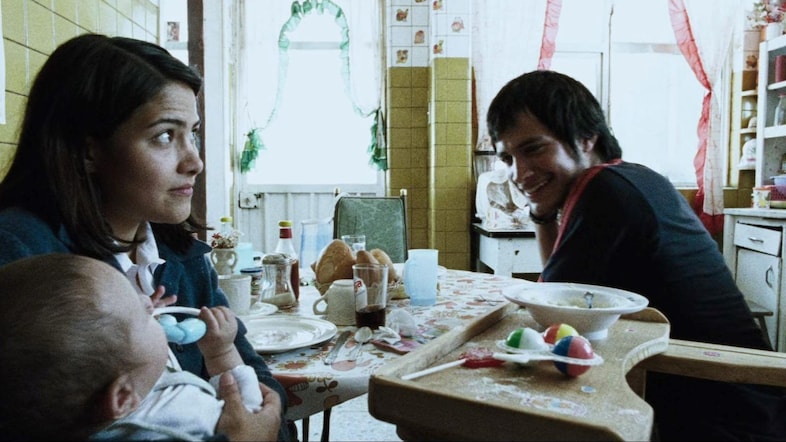
Amores Perros (2000)
Few filmmakers get it right on their first go, but Iñárritu proves otherwise with Amores Perros. Slavering hounds, doomed lovers and unlikely assassins collide with one another in this fabulist telenovela of desire and destruction, the first entry in his Trilogy of Death, later completed by 21 Grams and Babel. Gael García Bernal’s restless performance as amateur dog fighter Octavio rightly launches him on to the international stage (he starred in Cuarón’s Y Tu Mamá También the following year). But it’s Gustavo Santaolalla’s hypnotic score and Rodrigo Prieto’s sun-bleached cinematography that give Amores Perros its unmistakable pulse. Rough around the edges but utterly alive, this mongrel of a film leaves us no safe distance as its characters hurtle inexorably towards their own undoing. After all, as the tagline puts it, “love’s a bitch”!

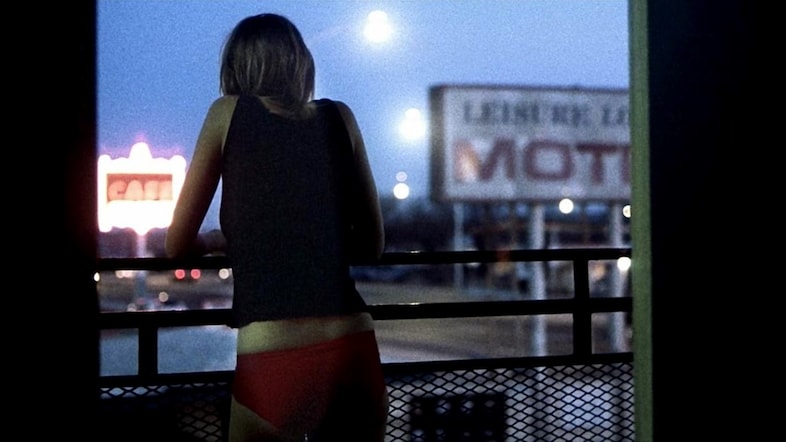
21 Grams (2003)
“They say 21 grams is the weight we lose when we die. The weight of five nickels, of a hummingbird, of a chocolate bar – and perhaps also of a human soul.” So goes the meditation of a man bleeding out in Iñárritu’s sophomore feature, a fractured triptych about what remains after death. Inspired by Dr Duncan MacDougall’s 1907 pseudo-scientific experiment on the nature of the soul, 21 Grams arrives in jagged, non-linear fragments, fitfully unspooling like memories recalled in a trance. At its centre is Naomi Watts (earning her first Academy award nomination), whose mercurial turn as a grieving mother is a masterclass in loss, rage and redemption. Often overshadowed by the sprawling films that followed, Iñárritu’s English-language debut may just be one of his finest – a quiet, unassuming triumph that puts his virtuoso storytelling on full display.

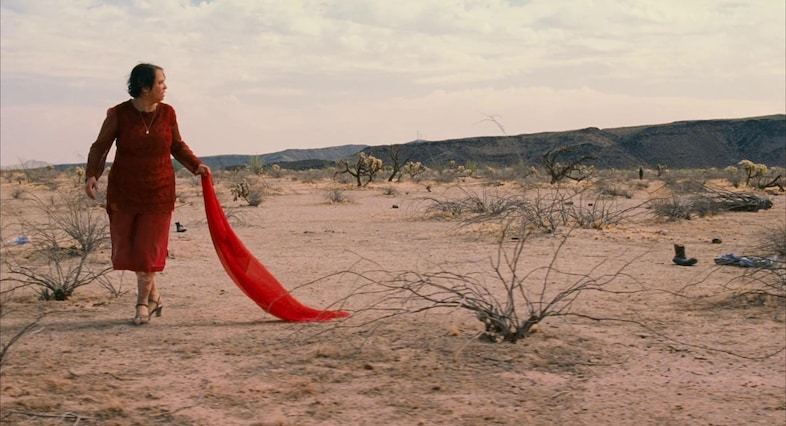
Babel (2006)
Taking its title from the biblical myth that God scattered humanity as punishment for trying to build a tower that would reach the heavens, Iñárritu’s Babel does not seek to recreate this rupture so much as embody it. Assembled as a mosaic of interlocking lives, the Cannes Ecumenical Jury Prize winner (awarded to a film that best “touches the spiritual dimension of our existence”) charts the devastating fallout of a single act of carelessness. An American tourist gets shot in Morocco, a chicken’s head is ripped off at a Mexican wedding and a Japanese teenager flashes her “hairy monster” at a group of boys – each person, each location ultimately revealing the same desperate impulses: to survive, to protect and perhaps most of all to be understood. Picking at the scabs of our estrangement without succumbing to glib post-9/11 platitudes, Babel is a sobering reminder that we are always just as close to separation as we are to connection.


Biutiful (2010)
While marking his departure from his longtime screenwriting partner Guillermo Arriaga, Biutiful makes clear that Iñárritu’s has lost none of his appetite for misery. A searing portrait of terminally ill street hustler Uxbal (Javier Bardem, in consummate form), the film thrusts us into the recesses of Barcelona’s underworld as he negotiates the thinning veil between life and death. Prieto’s handheld camera captures his final days with unsparing intimacy – spirits hover in corners and hallucinations multiply in the shadows, forcing our ailing protagonist to make peace with the inevitable. Biutiful is a poignant advance on Iñárritu’s formative works, its gritty magical realism and haunting articulations of mortality tempering his trademark fatalistic sensibility with a more searching, hard-won humanism. In his words, “Biutiful is not about death. It’s about life. It’s a hymn to life.”

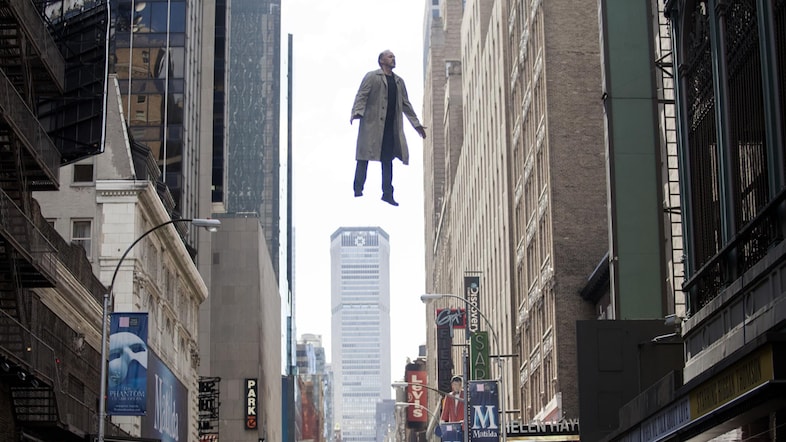
Birdman (2014)
In a 2014 interview, Iñárritu said that “if you stretch tragedy, it will always become comedy.” Birdman puts this thesis to work to exhilarating effect. Pitched as an absurdist showbiz satire, it revolves around failing movie star Riggan Thomson (Michael Keaton) and his panic-inducing bid to stage a comeback as a serious Broadway actor. Winning four Academy awards and a box office return of over $103m (against its sub-$20m budget), the film is a welcome shift of territory for Iñárritu – who finally offers his audience some respite with his raucous, if unexpected, tongue-in-cheek humour (“This is the theatre, honey, don’t be so self-conscious”) and dizzying leaps of imagination (at one point, Thomson takes flight over Manhattan: “There you go, you motherfucker. Gravity doesn’t even apply to you.”) Paired with Antonio Sanchez’s percussive, jittery score and cinematographer nonpareil Emmanuel Lubezki’s bravura long takes, the result is 119 minutes of big-screen whizz-bang that confirms Iñárritu as one of the most audacious filmmakers of his generation.

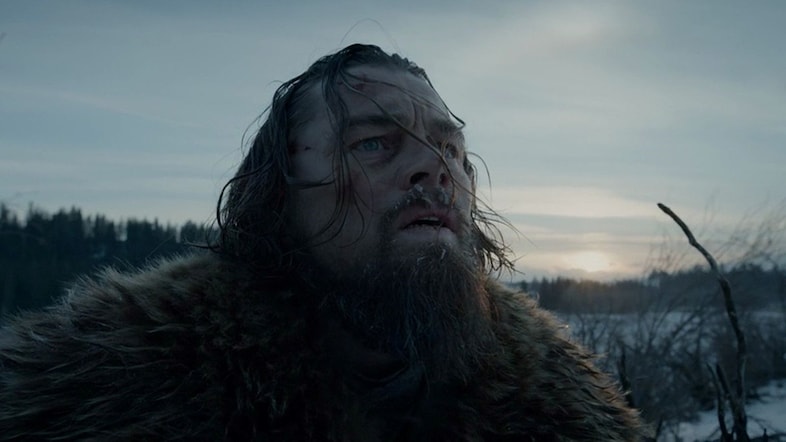
The Revenant (2015)
Arguably Iñárritu’s most recognisable film, The Revenant follows frontiersman Hugh Glass (Leonardo DiCaprio) on a fanatical quest to avenge his son amidst the escalating violence between fur trappers and Native Americans on the plains of the midwest. Lubezki’s roving widescreen lens hauls us through the wilderness as though governed by its own primal instinct, mercilessly exposing us to the elements so that, when Glass declares, “I ain’t afraid to die any more. I’ve done it already,” we cannot help but be convinced by the bloodthirsty resolve of a man pushed beyond the brink. For all its carnage, The Revenant transforms into something more spectral – a Malickian rapture threaded through oneiric visions of a bird erupting from Glass’s dead wife’s chest and embers rising into a vast, desolate sky. That even at its most overblown, every image manages to hold this tension between beauty and brutality, is a testament to Iñárritu’s enduring visual command.
Digger is out in UK cinemas on 2 October