
Looking south in the Parc des Tuileries, you could glimpse the tip of the Eiffel Tower above a boxwood hedge while Jonathan Anderson discussed his latest reiteration – reinvention? Revitalisation? – of the house of Dior. Glance away from Anderson, towards the westerly rail of his Dior clothes previewed a few hours ahead of his Spring/Summer 2027 show – the first big kahuna, in a Paris Fashion Week packed with them – and l’obélisque de Louxor came into view. Touristic vistas are fitting given that Dior itself is another French national monument. But rather than nullified and preserved in aspic – something Paris is wont to do, a city whose 18th-century flourishes and Haussmannian boulevards often feel frozen in time – Anderson’s Dior is ever-shifting. “This whole year was an arc of trying to rattle the brand,” he allowed. Which isn’t something you hear a creative director say often, honestly.




Anderson was holding a circle skirt as he said this, a little flippy nothing of ultra-fine georgette that, the designer asserted, could be packed alongside its matching shirt inside the container intended for its accompanying shoes. “I love that a whole outfit could fit in a shoebox,” he said. And, of course, that lightness has deeper meaning at Dior. Namely, “Moving the heaviness of heritage,” in Anderson’s evocative turn of phrase. Anderson is as compelling an interlocutor as he is a designer, with the estimable skill of being able to unpack said shoebox – and bigger things – to show his workings. This season, it seemed the circle was a theme not just in his ode to Dior’s characteristically voluptuous silhouettes and curvilinear cutting, but to his own experience at the house.
This collection was, in essence, full circle, honing and doubling down, with forceful conviction, on ideas Anderson has introduced during his tenure. It should be emphasised that, although we have seen a lot of his Dior given the speed of contemporary fashion’s cycles, Anderson has only been at the house for just over a whirlwind year. What these clothes seemed to indicate, however, was a longevity, a degree of eternality, especially to his style – that déjà vu could be a great thing, especially when you’re rattling something and trying to instigate the new. In his gentle evolutions of silhouettes and creative approaches, you saw no harsh beginning nor abrupt end. Everything flowed like gossamer.

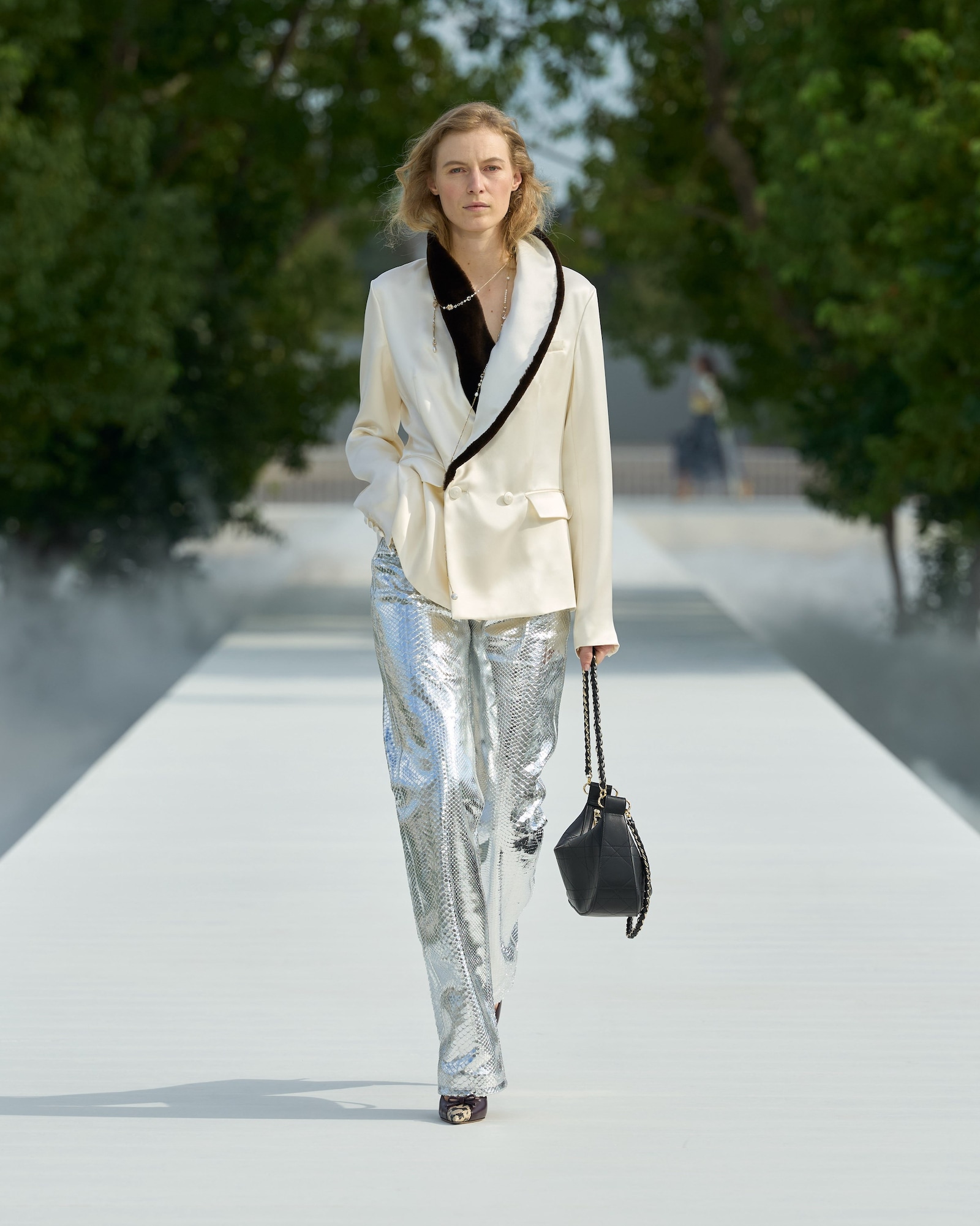

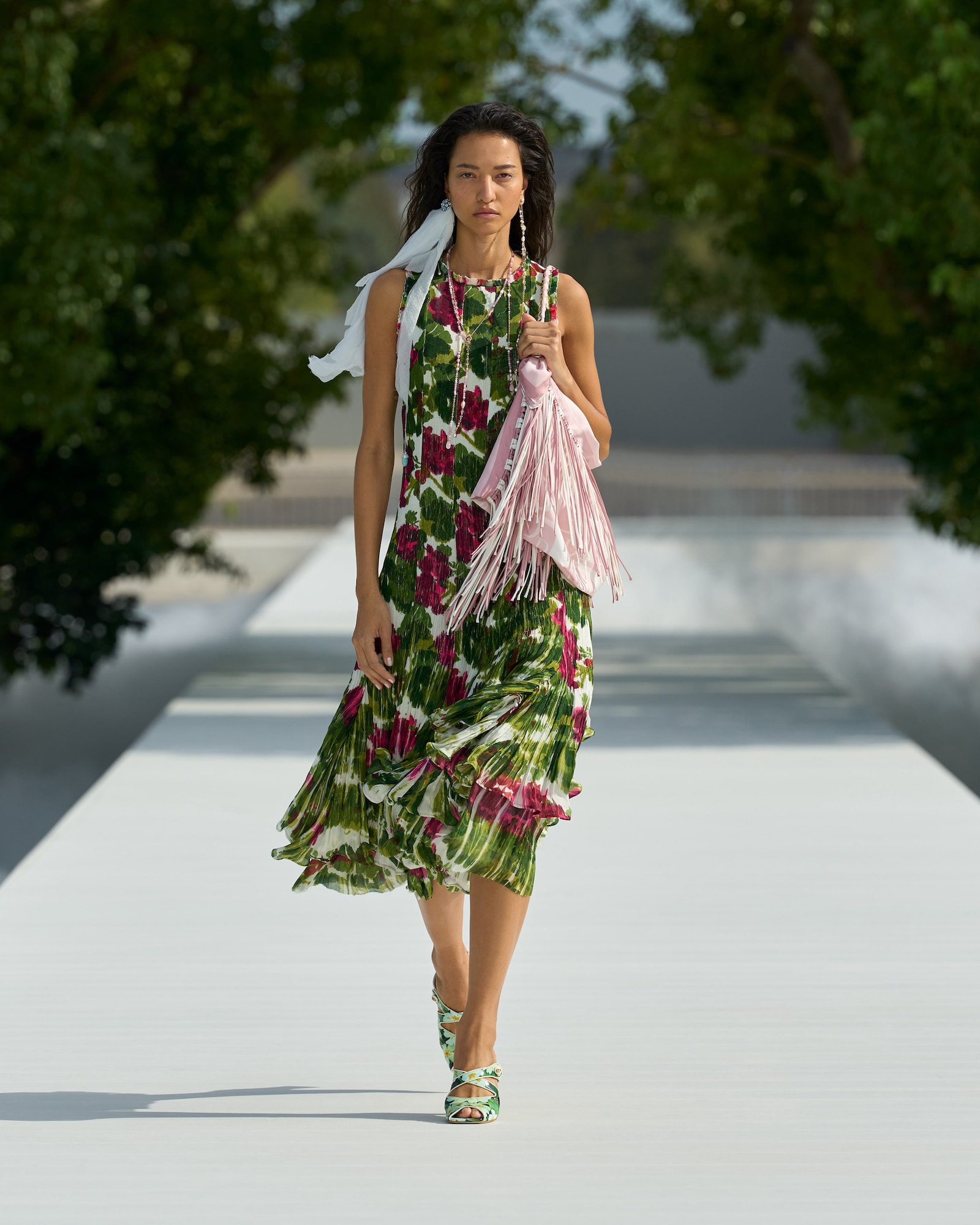
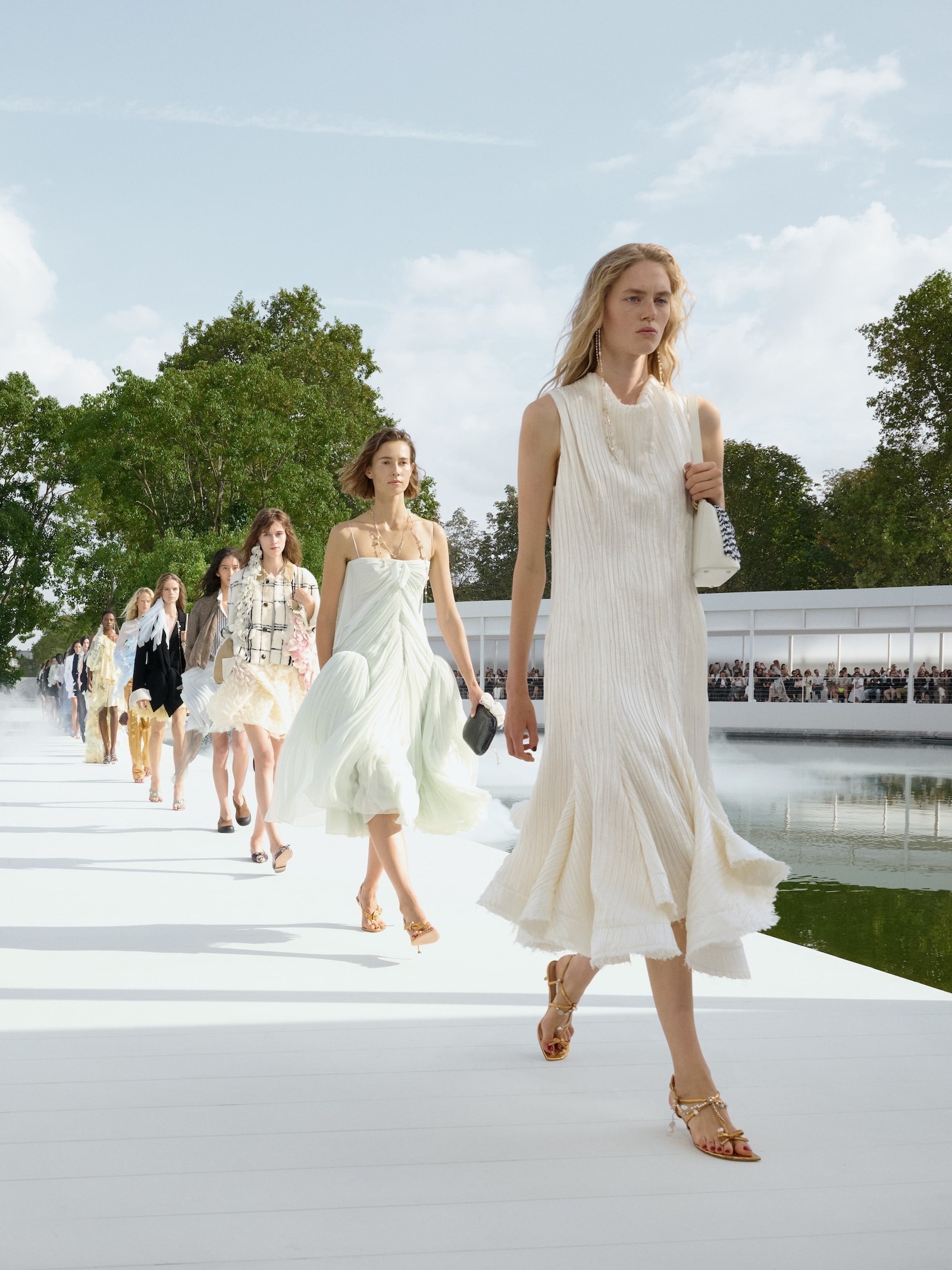
That’s a bit poetic. But Anderson seemed to be feeling such. He erected his catwalk – once again – over the fountain of the Tuileries, this time misting its surface (dry ice is, it seems, a smoke-and-mirrors fashion month trend) and allowing trees to grow magically from its depths. “Trees in the morning in fog. A lightness,” were ideas he threw out as abstract images that inspired him. “Everything blurs, like a Richter painting.”
There is, however, no fuzziness over Anderson’s vision of Dior, soft and beautiful though it may be. He’s honing it down, this proving his most precise and seductive offering, of breezy skirts and shifting forms, dresses billowing around the body as his women moved. That, in itself, is a minor revolution at Dior – Anderson played a lot with pleats, drawn from the scandalously hip-replacingly-heavy knife-plissé skirt of la Tailleur Bar, a full 15 metres in circumference. It could barely fit in a car, let alone a shoebox. But Anderson instead tugged at every piece and seemingly unravelled it, creating tailored shapes he dubbed “quintessentially Dior” in fine chiffon (first explored in his menswear show) printed to resemble tweeds or checked wools. Even when layered two or three times, you could still perceive the body within. Those were glorious.

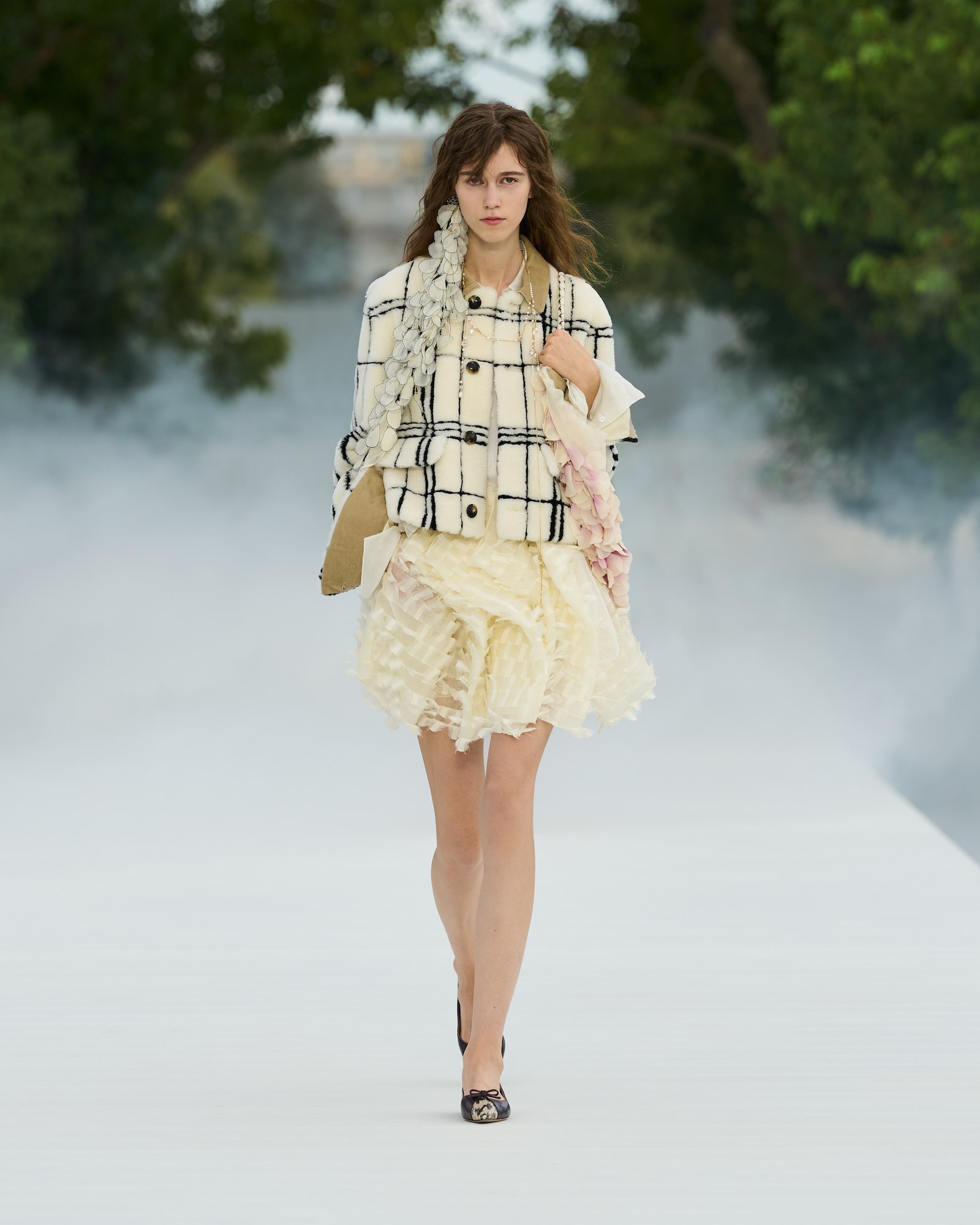

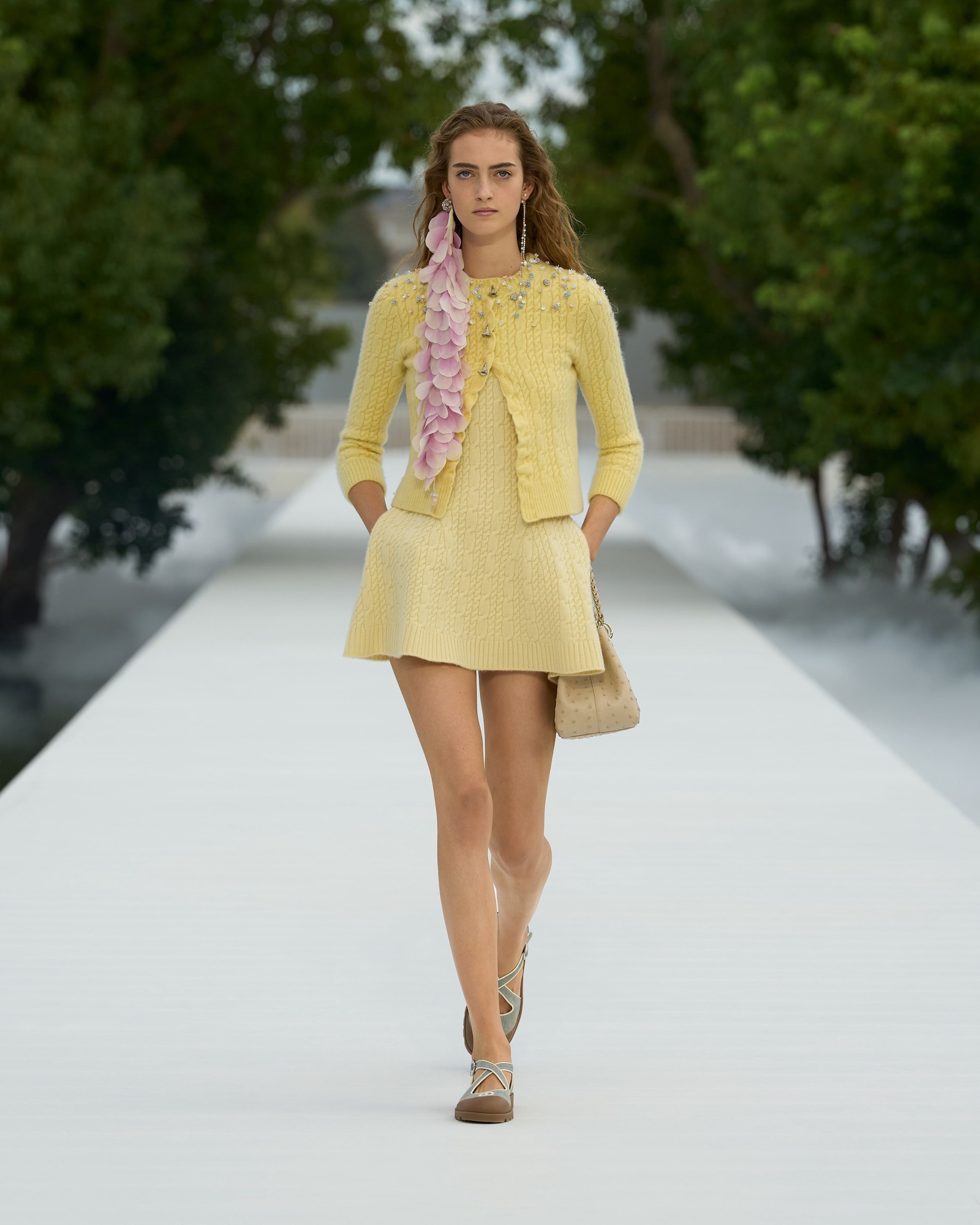
“It’s a compounding of what we’ve been doing,” explained Anderson, rattling out references to his past couture, ready-to-wear and menswear collections, his own micro-history of Dior already taking shape. And taking shape was an intention – this collection was part, he said, of a search for a silhouette. Although, actually, he’s figured it all out at Dior, abbreviating the house’s full skirt up high, pulling the waist in (but not too much), softening the shoulder. It’s a throwback 80 years, to 1947, and to the indelible identity of the founder’s debut. The same sense was here in the sweetest panniered dresses, again in filmy pleated chiffon, Watteau backs floating around the knee. Anderson pointed out that their bubbled hip volumes were created purely with circular cuts, rather than complex internal structures. Dior dresses were renowned for those, and the fact many could stand up by themselves – while he called Cristóbal Balenciaga “the master of us all”, Balenciaga reportedly dubbed Dior a madman when he saw how overly complicated his clothes were. Anderson sent a couple of walnuts out as an invitation to his show in the parc. Which seems droll, because trying to tackle a house of the magnitude of Dior – big in business, heavy in history – is enough to drive anyone nuts.

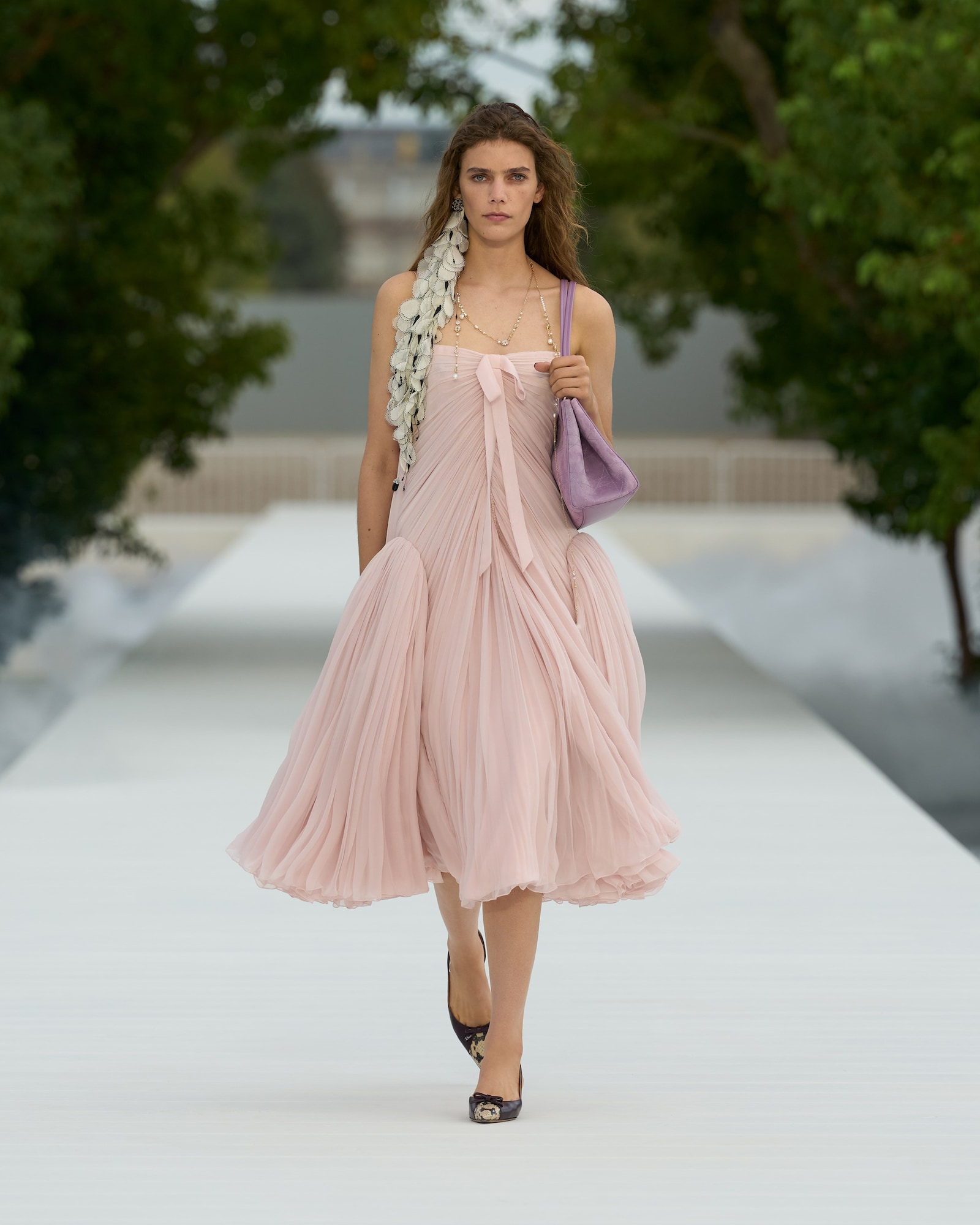

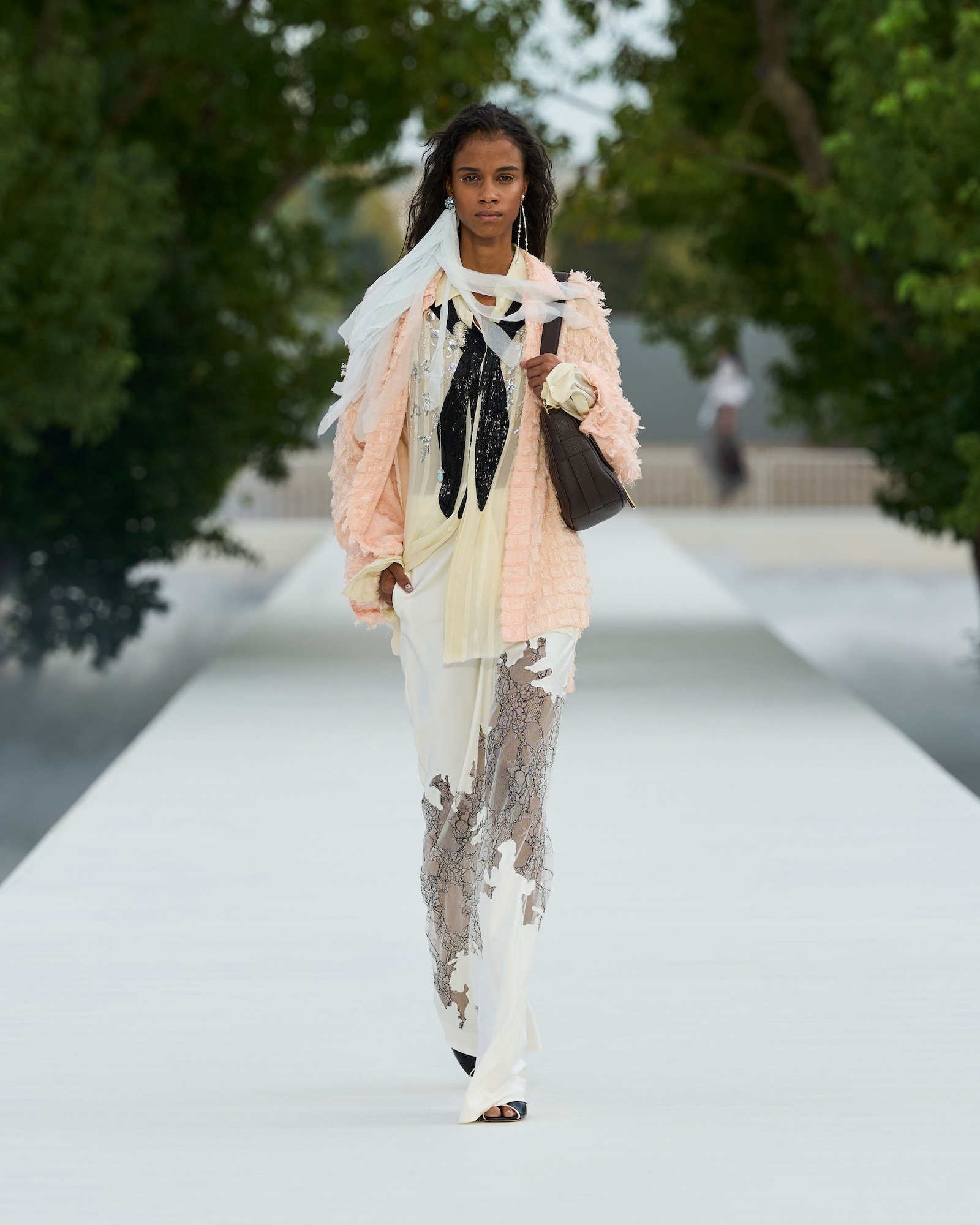
But Anderson is thriving. He’s also embracing the ideology and identity of Dior – the curves, the flowers, the succulent, saccharine, back-teeth-aching sugary palette. “I wanted something romantic,” Anderson said. “I was thinking of cheesy things – Jane Austen.” But there’s no cheese to his Dior – rather, it’s become a house of modernity and indeed lightness. They say heavy is the head that wears the crown – incidentally, the Tuileries borders the Louvre, the palais-cum-musée that used to house the French royal family. But Anderson today seems positively lightheaded enough to throw in some wild cards – he’s always been a master curator, and alongside the archival gardenia prints and ribbons and millefeuille layers, there were a few pairs of savagely zippered shoes drawn from 25 years ago, during Galliano’s tenure. “Trash,” said Anderson, smiling. He isn’t trashing a heritage, but he knows that, if you rattle something hard enough, it’s going to get a little beaten up. It’s no bad thing. Even the most revered of monuments need some renovation.