
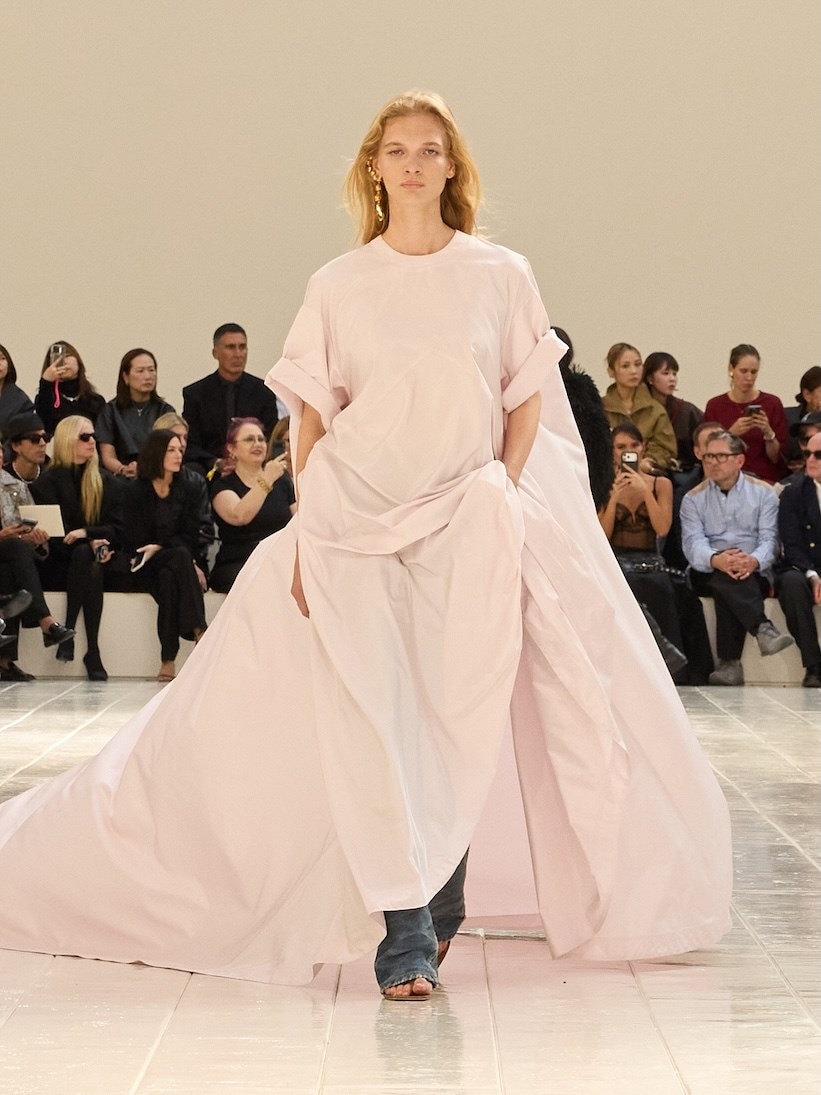
In a season of shows characterised, internally or externally, as personal, Pierpaolo Piccioli’s Balenciaga strikes a chord as probably the most singular, honest and individual. He has a long-standing relationship with the house’s founder, even though he died when Piccioli was four. Indeed, his work across his career has traced Cristóbal Balenciaga’s lines, inspired by his ideas of volume, of lightness and of course the primacy, the inviolability of haute couture as a creative process. “Cristóbal has always been one of my heroes,” Piccioli once told me, simply. It’s why Balenciaga means so much to him.
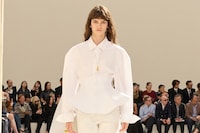
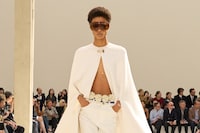
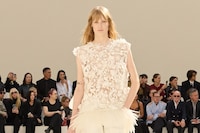
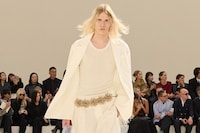
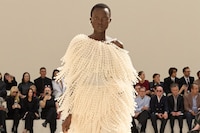
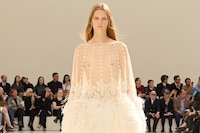
That kind of reverence could easily isolate a designer in an ivory – indeed, the all-white space of the Tennis Club de Paris could even be read as that. But Piccioli wants Balenciaga – and couture – to live on the streets. Granted, his vision of the street is very different to that of Cristóbal and also of his predecessor Demna. He’s more dressed down than the former (no white gloves) and fancier and more polished than the latter. But this collection was, probably, the best melding of all three (count ‘em) distinct and maybe divergent creative impulses. Including, of course, Piccioli’s own.
At the centre of the show space was Les Coraux de la Liberté, a vast textile work based on an atoll of coral by the French artist Aude Franjou that was first shown in the Bastille. It made you think of two things. Firstly, of course, it looks just like one of the layered coral necklaces Piccioli himself wears every day, personal style transformed into a support, it seemed, for the entire house. But if you’re a couture dork, it also recalled the phenomenal abstract window displays devised for Balenciaga’s couture house in the 1950s and 1960s by the sculptor Janine Janet. The one rule? They could never contain any merchandise, ever. Honestly, that idea was almost as radical then as it is today.

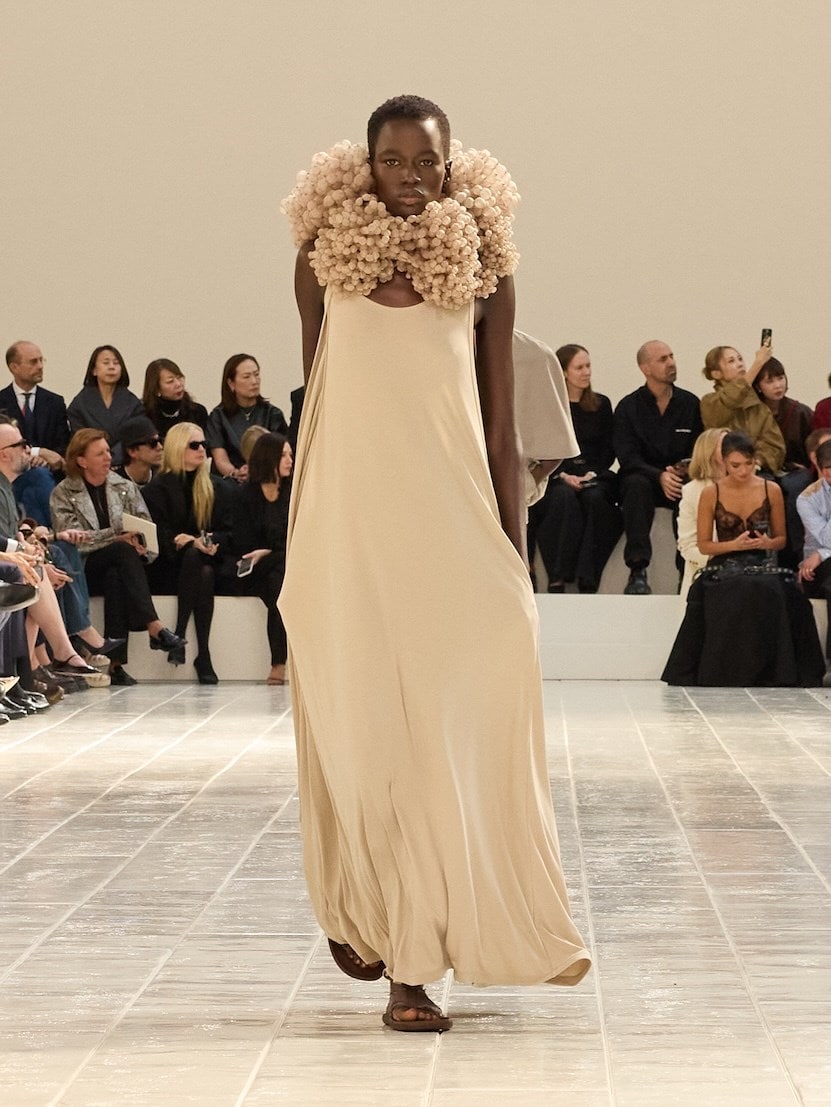

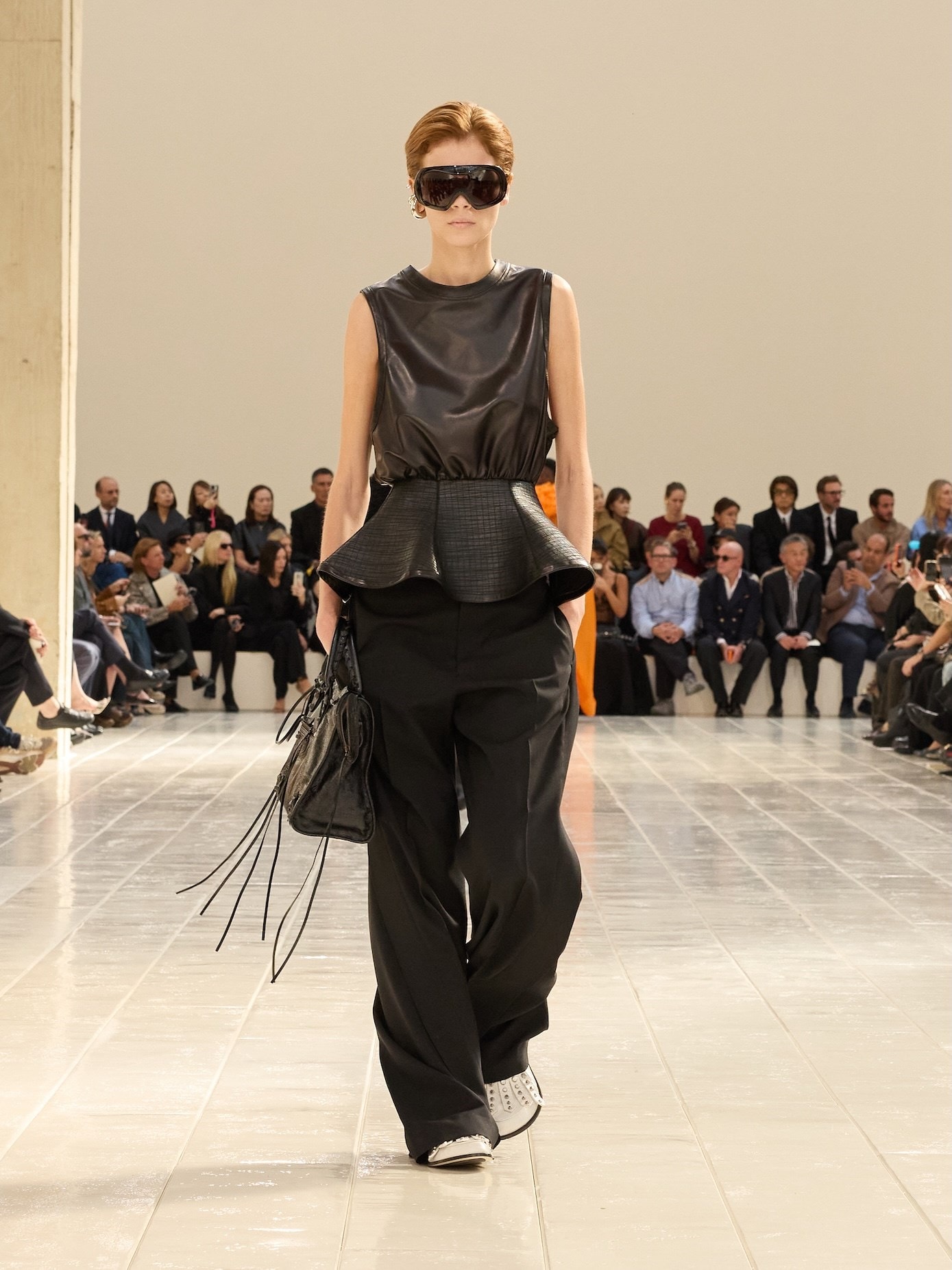
At a preview, Piccioli stated that this collection was “born” alongside the house’s 55th couture collection, his first for the Maison. For him, couture is a laboratory of ideas, a phrase Elsa Schiaparelli used. But this wasn’t about weird stuff or aping couture ballgowns in machine-made clothes. Piccioli instead industrialised processes invented during the genesis of that couture collection and used them for eminently wearable and buyable ready-to-wear. Everything, Piccioli said, was first worked on in the ateliers, with human hands – even the handbags were hand-draped, twisted and knotted to give them a tactile immediacy.
Most important was a methodology of stitching that shaped the corset of a virulent green ballgown in that collection, originally used to mould internal structures in tailored lapels. Here, it was externally applied across easy pieces like leather jackets, shifts and T-shirts, moulding shoulders, nipping waists, flaring basques at the hips. Elsewhere, Cristóbal-ian volumes were achieved with sports-inspired drawstrings – a little reminiscent of the time Cristóbal Balenciaga apparently copied the practical cut of his own raincoat (Women’s Wear Daily, who were pointedly less-than-reverent to the cult around the couturier, called it a Balenciagaberry).
Another idea important to Piccioli was bias-cutting. “Balenciaga never really did this,” he said – indeed, Balenciaga was about airy volume, the structure of gazar, not about slithery clothes pulled in close to the body. But as an idea, it synced with the concept of couture approaches – innovative sewing, exceptional cutting – transforming everyday pieces. Jeans were bias cut to give them a slouch (more discernible off the catwalk than on) and men’s tailoring was cut on the bias, structure and stricture completely stripped out. A Balenciaga approach, but with completely un-Cristóbal results.
There were also some direct conflicts, some intentional frictions – a billowing pale pink taffeta ballgown worn over jeans. But look again, and that ballgown was actually just a great big T-shirt, supersized like Piccioli’s coral. Couture can’t get more everyday than that.